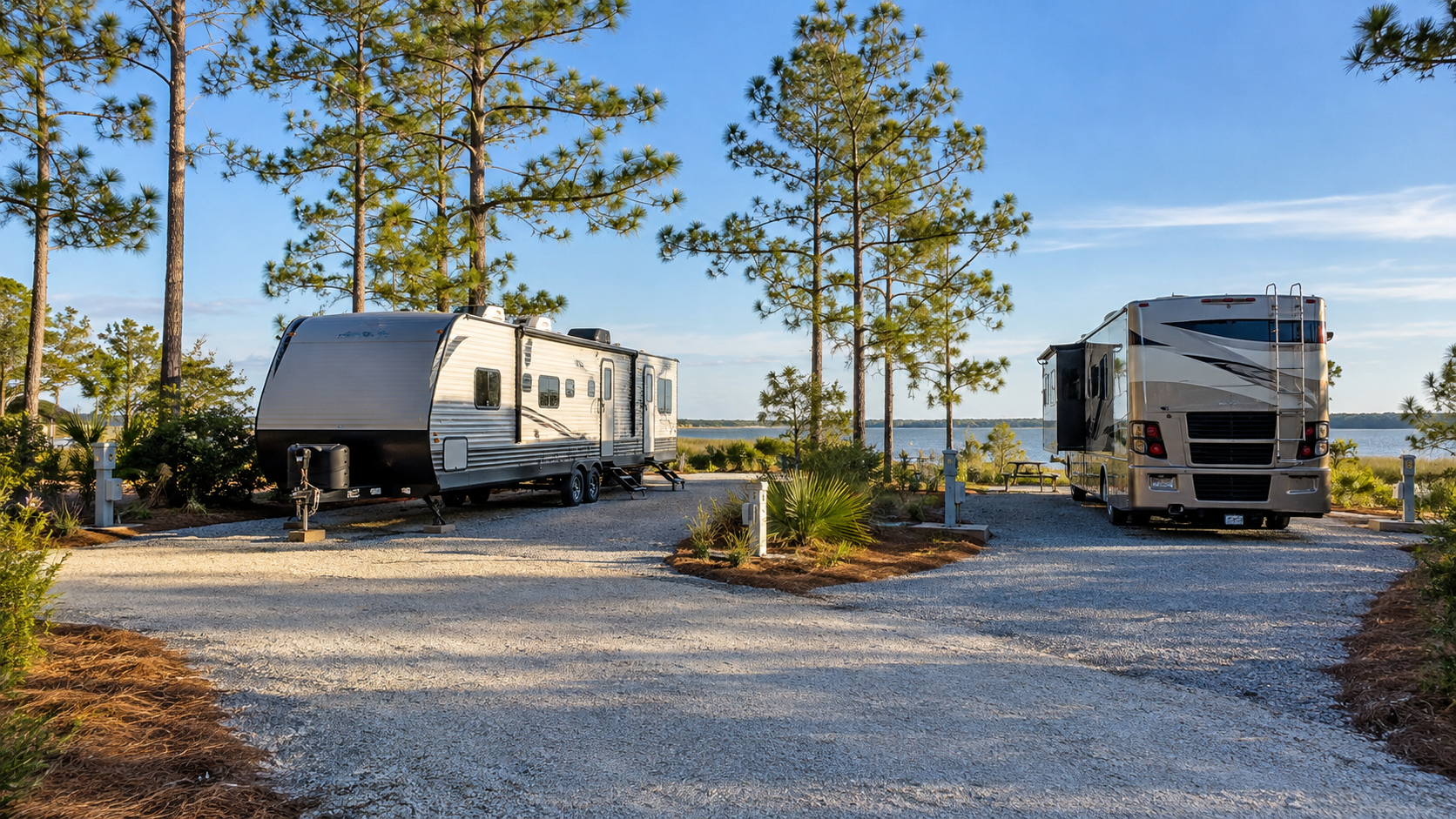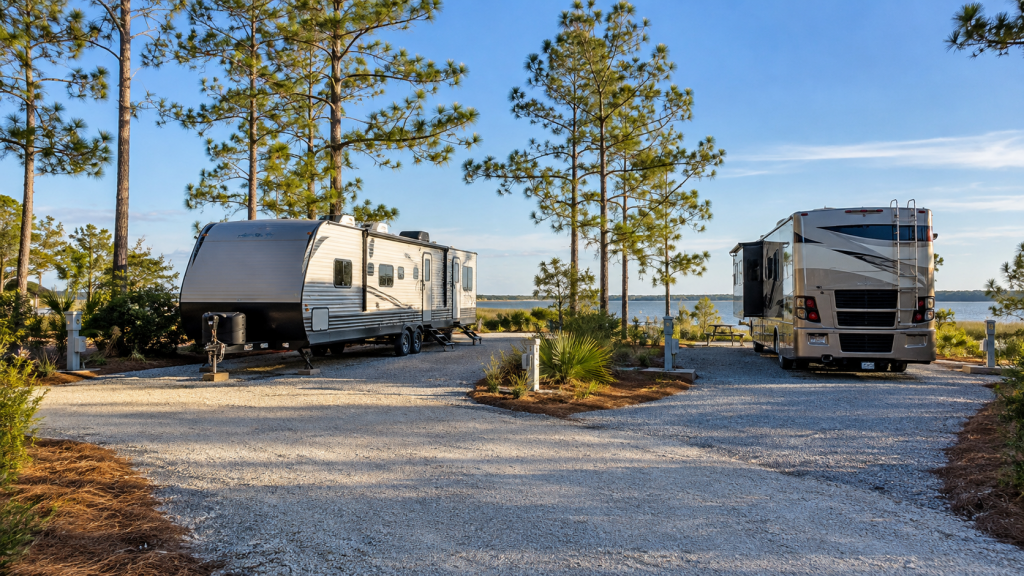
Arriving at a campground is easier when the site matches the vehicle you brought. Comparing pull-through vs back-in RV sites is therefore a practical part of trip planning, especially if you are towing, driving an unfamiliar RV, or arriving after a long travel day.
The Inlet at Lanier Pointe lists both layouts among its full-hookup RV options. The right choice depends on your equipment and the actual site details, not a rule that one layout is always better.
Understand What the Names Describe
A pull-through site is generally designed so a vehicle can enter from one end and leave through another. A back-in site requires reversing into the space from the campground lane.
Those labels describe the approach, not every feature of the site. They do not establish its length, surface, shade, view, or room for additional vehicles.
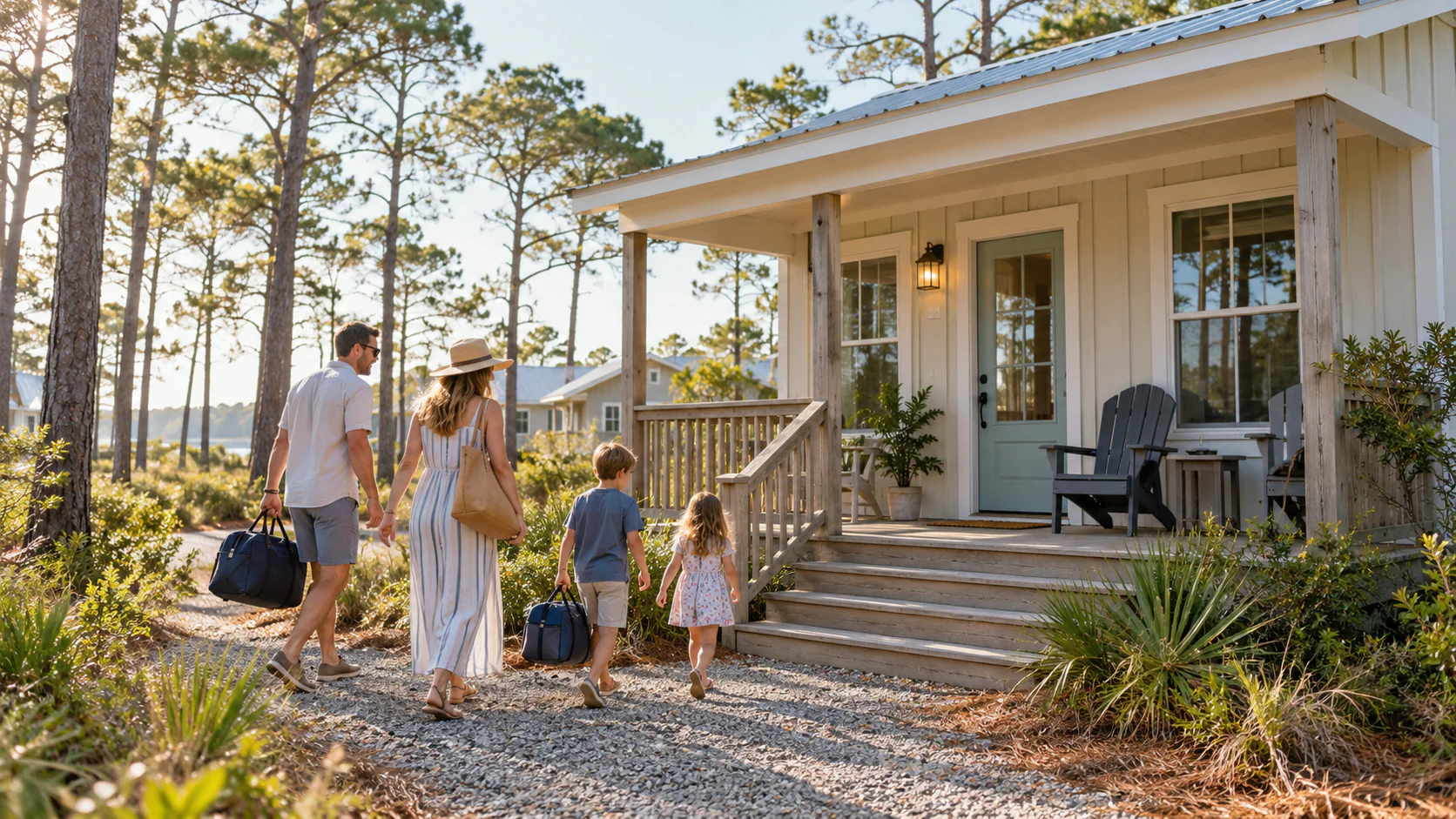
Review our RV site and accommodation information before booking, then confirm the specifications of the space you are considering.
Provide the Dimensions That Affect the Fit
Have your RV’s overall length, width, and height ready when making the reservation. Include relevant details about slide-outs, awnings, towing equipment, and any vehicle traveling with you.
If you are bringing a trailer, describe the combination clearly. The space needed to position the rig can differ from the space it occupies after unhitching.
Ask where the tow vehicle or towed car may be parked. Do not assume that a long-looking site permits every part of the combination to remain together throughout the stay.
Think About the Maneuver You Are Comfortable Making
A pull-through layout may appeal when you want to reduce reversing. You still need to check turning space, clearances, and any instructions for entering the site.
A back-in layout can be entirely suitable if the site fits your RV and you are comfortable with the approach. If reversing is unfamiliar, practice in an appropriate safe setting before the trip.
Use a spotter when helpful, agree on signals, and stop whenever communication becomes unclear. Keep children and pets away from the maneuvering area.
Separate the Layout Decision From the Hookup Check
When comparing pull-through vs back-in RV sites, also verify the utility connections for the specific reservation. Confirm electrical compatibility and the position of connections relative to your RV.
Follow your equipment manufacturer’s instructions for connecting and setting up. Carry the correct equipment for your vehicle rather than planning around an improvised connection.
Our June RV packing checklist can help you review general supplies, but your own vehicle’s requirements should guide technical preparation.
Make Arrival a Separate Part of the Plan
Save the campground address, reservation confirmation, and arrival instructions before setting off. Ask the team about any important approach information for your rig.
Where possible, leave enough daylight and time to position the RV without rushing. If your arrival changes, contact the campground rather than assuming after-hours procedures will be obvious.
Check DriveNC for road and traffic information before traveling through North Carolina. Review the route for your vehicle’s dimensions as well; a route suitable for a car may not suit an RV.
Choose From Confirmed Details
Do not infer that a back-in site is quieter or that a pull-through site has a better view. If location, access, or a particular feature matters, ask about it directly.
Use our contact page to discuss the equipment and dates you have in mind. Comparing pull-through vs back-in RV sites with those details gives you a clearer choice and a more manageable arrival at The Inlet.