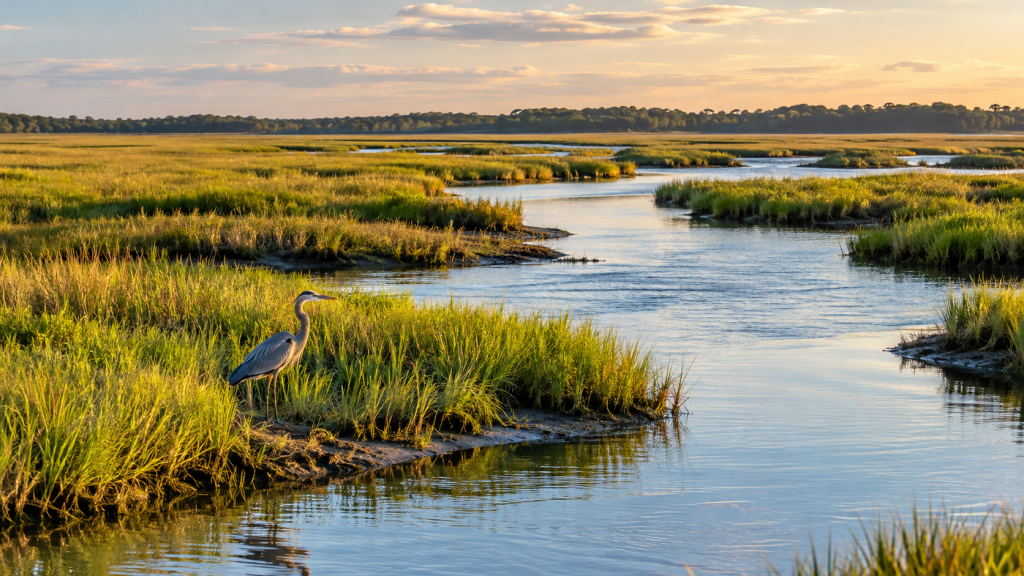
North Carolina estuaries offer a different way to understand a coastal vacation. Instead of looking only toward the ocean, take time to notice the sheltered waters, marsh vegetation, and tidal edges that help shape the region.
You do not need specialist equipment to become more curious about these places. A little background and a respectful visit from an established public viewpoint can change what you notice during your stay.
What Makes North Carolina Estuaries Interesting?
An estuary is generally a place where freshwater and seawater meet. NOAA’s estuary explanation introduces the mixing of water and the habitats associated with it. oceanservice.noaa.gov
These environments are dynamic. Water levels, salinity, and habitat conditions can change, so the view is not the same on every visit.
Think of your outing as a chance to observe one moment in a larger system. You might notice vegetation along the edge, channels through the marsh, or evidence of changing water levels without trying to identify every species.
Understand Why Sheltered Habitats Matter
Estuary habitats provide important feeding, refuge, and nursery areas for many animals. Marshes and other coastal habitats can also help filter runoff and reduce the effects of erosion and flooding.
The NOAA estuary habitat guide explains these connections. Understanding them adds meaning to a landscape that might otherwise seem like a quiet stretch of water. NOAA Fisheries
During your visit, ask a simple question: what does this habitat provide? Shelter, food, and space for young animals are useful starting points.
Observe From Established Public Areas
Choose a lawful public boardwalk, pier, or designated viewpoint. Stay on approved surfaces and follow posted rules rather than stepping into marsh vegetation for a closer look.
Binoculars can help, but they are optional. Watch for movement, listen, and spend a few minutes looking at one small section of the landscape.
Avoid feeding wildlife or trying to handle animals. A good observation is one that lets the animal continue its normal behavior while you remain at a respectful distance.
If you enjoy a waterfront routine, our dockside living guide offers another way to think about making time near the water during your RV stay.
Turn Curiosity Into a Family Conversation
Ask children to describe what they see before searching for names. Is the plant growing in water? Where is the edge between land and water? What signs suggest the waterline has moved?
Draw a quick sketch or record a short observation. Keeping the activity simple encourages attention without turning the outing into an assignment.
For a broader coastal itinerary, our Topsail Island vacation guide can help you organize another part of the trip.
Carry out your rubbish, keep pets under control where permitted, and leave the habitat as you found it. Discovering North Carolina estuaries can add depth to a coastal holiday. Explore The Inlet and plan your RV stay with time to appreciate the landscape around you.